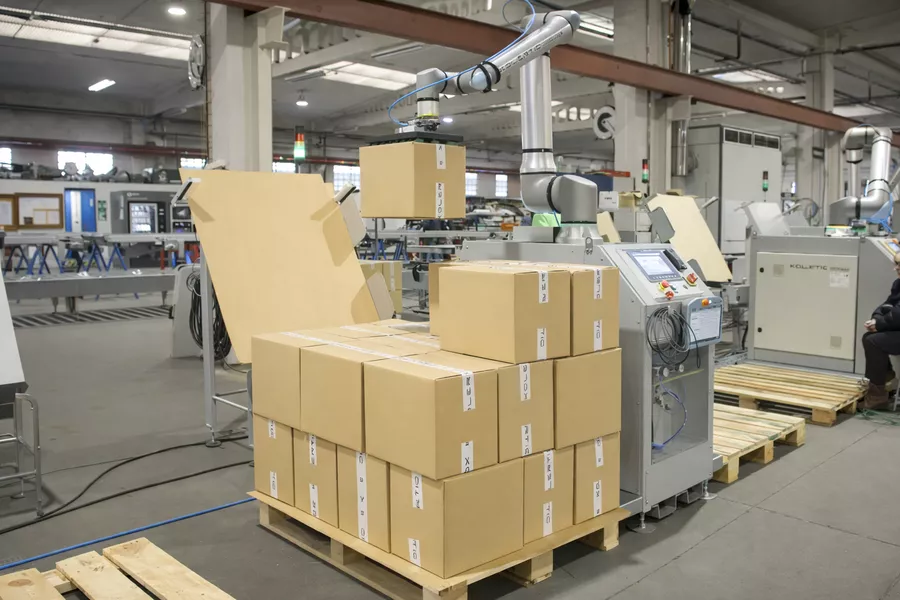
The food industry continues to face increasing pressure to improve efficiency, maintain product quality, and ensure workforce safety. In this environment, collaborative robotics automation has emerged as a powerful solution for optimizing end-of-line processes such as case packing and palletizing—while reducing labor strain and operational costs.
What Is Collaborative Robotics Automation?
Unlike traditional industrial robots that operate behind safety fencing, collaborative robots—commonly known as cobots—are designed to work safely alongside human operators. Their flexible programming and adaptability make them ideal for production lines that require frequent changeovers or prioritize ergonomics and safety.
Cobots handle repetitive, physically demanding tasks such as:
- Case packing
- Palletizing
- Heavy product handling
- Repetitive material transfers
The goal of collaborative robotics automation is not to replace workers, but to support them—creating safer, more efficient operations where employees can focus on higher-value responsibilities.
Key Benefits of Collaborative Robotics Automation
1. Increased Efficiency and Throughput
Integrating cobots into production lines increases output without sacrificing quality. Collaborative robotics automation enables continuous, consistent performance, reducing downtime and improving overall line throughput.
This is particularly valuable in industries such as oils, vinegars, sauces, and other liquid products, where fragile packaging makes manual palletizing both risky and costly.
Because cobots are easy to reprogram, manufacturers can quickly adapt to:
- New SKUs
- Different packaging sizes
- Changing pallet patterns
- Seasonal demand fluctuations
This agility is critical in today’s competitive North American market.
2. Improved Worker Safety and Ergonomics
Labor shortages and workplace injuries remain major concerns across U.S. and Canadian manufacturing facilities. Tasks such as repetitive lifting, stacking heavy cases, or working in awkward positions often lead to long-term musculoskeletal injuries.
Collaborative robotics automation reduces these risks by automating high-strain tasks. Cobots are equipped with force sensors and collision detection systems that allow safe interaction with operators, often eliminating the need for extensive safety fencing.
The result:
- Reduced injury risk
- Improved ergonomics
- Better workforce retention
- Optimized plant floor space
3. Flexibility for Multi-SKU Production
Today’s food market demands variety—especially in liquid products such as oils, vinegars, syrups, and sauces. Manufacturers must manage multiple packaging formats while maintaining consistent quality.
Collaborative robotics automation allows rapid reconfiguration of production lines to accommodate:
- Different bottle shapes and sizes
- Varying case dimensions
- Custom pallet configurations
- Changing production volumes
This flexibility ensures that companies can launch new products or respond to demand spikes without major operational disruption.
4. Consistency, Precision, and Product Integrity
Manual handling increases the risk of misalignment, breakage, and inconsistent pallet builds. Cobots ensure precise placement, consistent orientation, and controlled handling—reducing product damage and improving presentation.
In addition, automated and repeatable processes enhance traceability and compliance—both essential in the food industry. Maintaining process consistency supports regulatory requirements and strengthens supply chain reliability.
Implementation Considerations
While the advantages are clear, successful collaborative robotics automation requires thoughtful planning:
- Workforce Training: Operators must be trained to program and supervise cobots.
- System Integration: Seamless connection with existing production and ERP systems is essential.
- Upfront Investment: Hardware, software, and integration costs must be evaluated—although ROI is typically rapid.
With the right partner, these challenges become manageable and strategically advantageous.
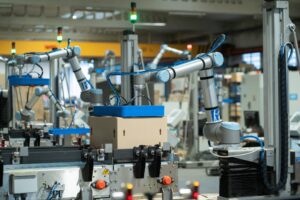
Use Cases in the Food Industry
Collaborative robotics automation is particularly effective in environments handling fragile or liquid products. Typical applications include:
- Case packing bottles and containers
- Layer palletizing
- Precision pallet building
- Product transfers between case packing and palletizing stations
These systems maintain production flow while reducing dependence on manual labor—without compromising quality or safety.
Transform Your End-of-Line with Collaborative Robotics Automation
Collaborative robotics automation is reshaping North American food manufacturing by combining productivity, safety, and flexibility at the end of the line.
By integrating cobots into case packing and palletizing operations, manufacturers can:
Increase throughput
- Reduce labor-related risks
- Improve product consistency
- Lower operational costs
At Xolertic, we design custom collaborative robotic cells that integrate seamlessly into existing end-of-line operations—delivering safe, flexible, and high-performance automation solutions.
If you’re looking to maximize plant productivity and ensure consistent output, collaborative robotics automation is a strategic investment you can’t afford to ignore. Contact us.